

The organisation pushing transphobia in the arts world
Freedom in the Arts? It's not what it says on the tin.

There is no shortage of crises facing the arts.
Working conditions, low pay, burnout, closing venues, and a dire lack of funding are being felt by arts workers and communities everywhere.
But if you were to read the beliefs of one particular group, Freedom in the Arts, bearing a name that you might think at a glance would take these things seriously, cultural production and arts workers are facing an entirely different critical conjuncture.
And what is the nature of this conjuncture, you might ask? Why, it’s censorship and intimidation! Is this from the bosses and owners who are trying to sacking workers who are organising? Do they mean such cases as when the director of an opera house tried to snatch away a Palestinian flag from a chorus member on stage, and the concerted media smear campaign against the performer afterwards?
No, actually. They mean the freedom to be transphobic, mostly. Let’s dig in a little bit.
Freedom in the Arts (FITA) was founded in 2023 by ex-Arts Council England (ACE) employee Denise Fahmy and dancer and choreographer Rosie Kay. It claims in its manifesto that
‘Recent times have seen the rise of a new set of moralistic and political attitudes which many institutions and activist groups have adopted as dogma. While society continues to debate complex issues such as race, sex and gender equality, religion, climate change, and geopolitical events, the arts have rushed to offer singular, unnuanced responses that shut out other views and often alienate audiences… Freedom in the Arts is a 5-year emergency project to tackle the culture of fear and intimidation facing artists. It will strive to reverse the ideological capture of arts institutions and encourage free thought and expression.’
They have been mentioned in and supplied quotes for articles in popular industry outlets, such as The Stage and Arts Professional, numerous times, as well as appearing in the broadsheets The Standard, The Times and The Telegraph. Their second published report, ‘The New Boycott Crisis’, had its launch in Westminster Palace in April, at which Tory MP Nigel Huddleston, Shadow Secretary of State for Culture, Media and Sport, gave a speech.
Their manifesto is exemplary of a certain kind of political strategy that nestles its reactionary heart within appeals against ‘dogma’ and the ‘unnuanced’. Amongst the various issues it so dearly begs restraint on, and if you’re familiar with the language of the right, you can pretty quickly identify that transphobia is the main impulse driving FITA in the use of the phrase ‘institutional capture’. The conservative media often expounds a narrative of ‘institutional capture’ when discussing ‘trans activists’, or, even worse, ‘transgenderism’ or ‘transgender ideology’ (a term which really should have your fascism-sensors tingling). It characterises the trans people as an intrusive alien force, whose very existence is an aberration against the narrow gendered logic through which transphobes understand the world and rationalise their place in it. Trans people are constructed as an insidious political force that must be opposed at all cost.
Denise Fahmy and Rosie Kay’s journeys to founding FITA mirror the cases of Kathleen Stock and Maya Forstater, who each have made a tremendous amount of hay out of being ‘cancelled’ and the headline court cases that followed, becoming critical figures in the anti-trans movement in the UK. After being shunned by her colleagues surrounding the issue of ACE funding a film produced by the trans-exclusionist LGB Alliance, Denise claims there was a ‘tsunami of bullying in the sector’ and made a formal complaint against ACE for not standing up for her, and brought a whistleblowing case to the Culture Secretary. Although this failed, she won a tribunal alleging harassment by ACE that she had brought forward to ACAS, though she had resigned from her job by the hearing. In the hilariously titled article ‘I was cancelled at my own dinner table’, Rosie Kay claims that her own dance company made her position untenable by dancers making complaints around her comments regarding transgender and non-binary people, and the investigations by the board that followed.
Rosie has since run the gamut of far-right media and podcast appearances, including spiked, Andrew Gold, Laurence Fox’s ‘Reclaim the Media’ and GB News. She has entirely doubled down on the transphobia and repeated common transphobic talking points: women are women because they undergo unique suffering that males can’t understand, and children are being dissociated from their own bodies and sterilised by coercive forces. She is very concerned with this dissociative aspect, claiming that ‘transgenderism takes away the very essence of being human’, because trans people are ‘unable to orgasm’ (sorry, what?) or (even more bafflingly) ‘appreciate fine art’.1
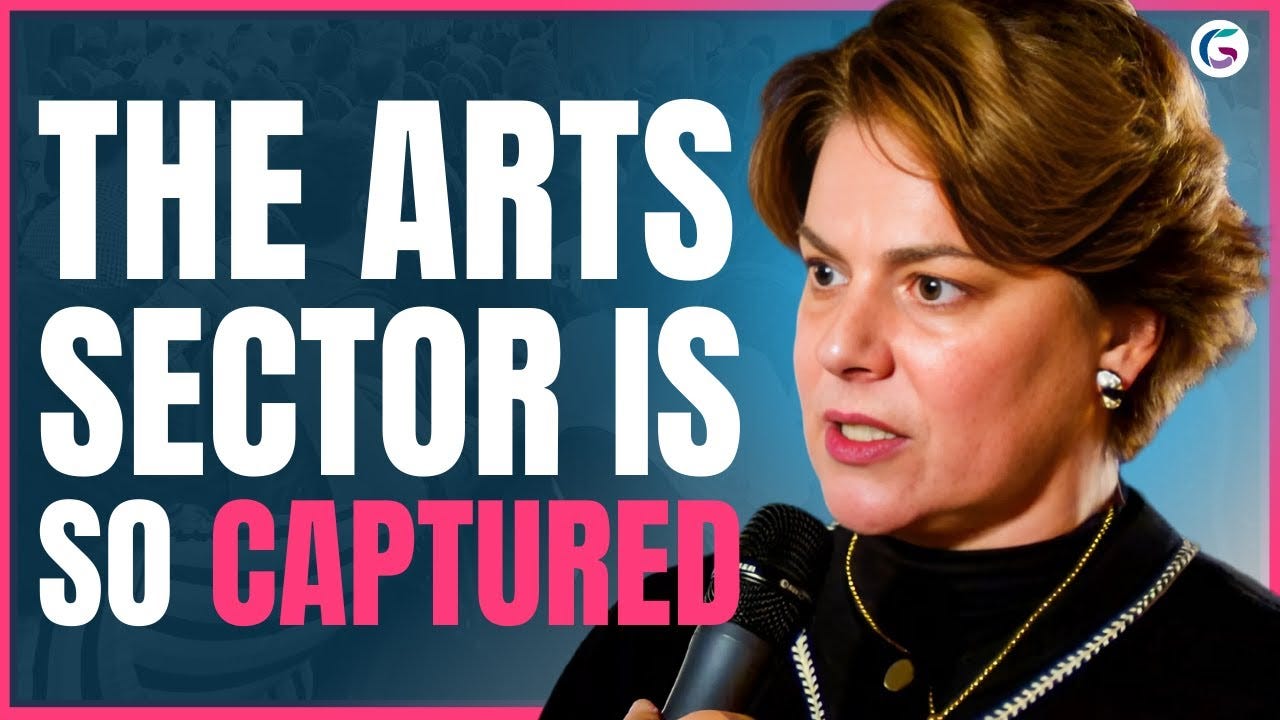
The founders of FITA have however been canny enough to mystify their views as ‘gender-critical views’ and ‘differences of opinion’ for the sake of the organisation’s respectability. This is entirely consistent with the characteristics and methodology of contemporary British transphobia. Like other organisations dedicated to normalising and legitimising transphobia such as Sex Matters and For Women Scotland, which recently won a case at the Supreme Court, with the judge ruling the Equality Act (2010) defines man and woman as referring to ‘biological sex’, regardless of whether someone had a gender recognition certificate under the Gender Recognition Act (2004). FITA’s strategy seems to be one of becoming the authoritative voice of ‘legitimate concerts’, rubbing shoulders with politicians, and being in a position to fundraise and fight court cases that would set legal precedents.
With the contemporary movement growing out from an organised response to the Reform of the Gender Recognition Act (2004) consultation in 2018, and having been incubated in online communities such as Twitter2 and Mumsnet, transphobia has become a substantial part of the culture wars, spurred on by the legal cases fought by organisations like Sex Matters and FITA and a sympathetic media. Top-down trans-exclusionary policy decisions are becoming increasingly common. Trans people’s legal recognition, bodily autonomy and ability to exist in public spaces are under attack, as seen recently with the new EHRC guidance that segregates trans people from public services.
The organised anti-trans movement can be understood as part of a wider political formulation that is revanchist in the face of the destabilisation of traditional gendered hierarchies. It is an effort to discipline struggles that critique and resist gendered structuring of social relations, labour and social reproduction that are essential to contemporary capitalism. As feminist theorist Sophie Lewis writes on the confluence of transphobia and being anti-sex worker, trans people and sex workers are treated as expendable ‘outcasts’ by reactionary feminists, and ‘are well placed to garner proscribed knowledge from the wrong side of their assigned locations, trafficking as they do in activities that simultaneously explode and undergird the mythic dyad of formal value production and national reproduction.’ Arts and culture is but one site of contestation in the realm of labour and the production of value.
The most substantial bodies of writing produced by FITA take the form of two reports. They each take industry-wide swipes at what they view as the most important issues that face the arts: freedom of speech and the danger of boycotts. I’m not an expert about research, but they don’t seem to be the most methodologically sound.3
The first, Afraid to Speak Freely, published in 2025, posits that arts workers feel arts workers live under a ‘pervasive culture of ideological conformity’, and feel afraid to express their real views. Based on responses from 481 people, and authored by Rosie, Denise and Prof Jo Phoenix, it treats itself as the successor to an earlier 2020 report commissioned by Arts Professional, Freedom of Expression, which surveyed 513 Arts Professional subscribers, and asks the same questions and compares how views have changed over the years. While Arts Professional subscribers would more or less represent something of a cross-section of the sector, albeit more well off and from the managerial class, the FITA report does not state where it drew its respondents from. Given I have no choice but to guess, I think the survey was sent to those who’d be more likely to be sympathetic to FITA’s cause.
The report claims that its research has found that freedom of expression and artistic freedom is increasingly undermined since the 2020 report, with higher percentages of respondents answering that those expressing controversial opinions face ostracisation, and that management is less inclined to take creative risks. While the 2020 report does what in my view is an exercise in airing grievances about right-wing opinions being shunned by an overwhelmingly liberal sector (the sheer intolerance!), there are some actual issues relating to autonomy, representation and misogyny raised, such as lip-service being given to the inclusion of disabled people rather than meaningfully engaging with or employing them, feelings of being unable to criticise private funders, ageism, and bullying and sexual harassment by those in positions of power.
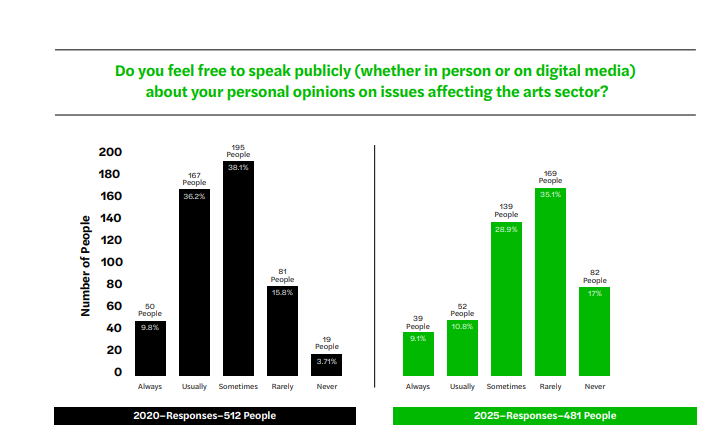
The much shorter FITA report preserves only the theme of intolerance towards right-wing political opinions. Surprise surprise, ‘heterodox’ viewpoints regarding gender and trans people are most likely to make someone be ‘cancelled’, followed by support for Brexit, opposition to EDI, criticism of ‘critical race theory’, and support for Israel.4 The report is peppered with quotes from respondents such as ‘any criticism of Islam will get you labelled Islamophobic’ and ‘artists are instantly isolated when they fail to speak the currently accepted line.’ It’s pretty obvious that it is a cynical attempt to put an objective spin on what is a very partisan piece of political writing.
FITA’s second report, The New Boycott Crisis, authored by the same people, continues along similar lines, arguing that in recent waves of boycotts aimed at cultural institutions and performances that ‘individual and institutional ‘impartiality’ or ‘neutrality’ is no longer tolerated’, and ‘it is an interconnected web of coercive practices - cancellation, silencing, exclusion, professional isolation, bullying, funding pressure, forced political statements, harassment and reputational harm.’ I don’t want to overinflate the word count of this piece by going into exactly how cowardly and weasel-worded the whole report is, but I will say that it is, not-so-subtly, an attempt to rally support against boycotts that act in response to the current genocide in Gaza. The report is a call to discipline political activity by arts workers and audiences that make any material attempt to halt British complicity in the genocide, and to preserve the sponsorship model of arts funding in securing the ideological limits of how the arts are engaged with and financially structured in the interest of capital and state. In response to the Bands Boycott Barclays campaign,5 the report says rather sneeringly that ‘perhaps the only real outcome [was] the risks to sustainability of the business model.’ Won’t someone please think of the business model?!?!?!
Again, we don’t know how they did their sampling, but responses were recorded from 158 artists, as well as a paltry 15 employees from arts venues, and 21 artist managers, promoters and agents. I don’t think that’s a very substantial sample of the sector if you ask me. To be fair to them, they admit they ‘do not claim that these findings are statistically representative of the entire arts and cultural sector’, but they sure want us to think there’s some kind of silent majority that opposes political boycotts on principle.
The problem with the conservative freedom of speech crusade is that it treats opinions as things that exist in the ether, contextless and weightless, that should be tolerated no matter what they might imply about how the opinion holder may consider and treat their fellow human beings. If you demonstrate that you harbour a hatred for a certain minority or have a malicious ignorance on a given topic, don’t be surprised when people don’t want to work with or give you opportunities. And above all, I think the political premise of these reports fall at the first hurdle. ‘Freedom of speech’ is definitely not the most useful lens to criticise the sector at the present conjuncture.6
Freedom in the Arts can be understood as an attempt to be another wedge in the door, a vehicle for anti-trans lawfare through the courts that can be driven once the right headline-grabbing case turns up, and to generate reports that ill-intentioned cultural leaders can pick up and run with. This is entirely the kind of organisation that depends on institutional legitimisation and lobbying in the halls of power rather than grassroots support or workplace organising.7
The arts world has pretty overwhelmingly progressive politics. We don’t really have statistics relating to representation and working conditions of trans people in the arts, but the Arts Pay 2025 survey showed that 54% LGBTQ+ reported facing significant barriers to entering the sector in the first palace. Speaking anecdotally, the arts world is, on the whole, pretty normal about the existence of trans people. The media and political class, however, have driven themselves into an unhealthy obsession with trans people to the tune of 9 articles per day on average, according to Amnesty International. What is essential to making any effective response, however, as I argued in my recent piece for Tribune, is the kind of politicisation FITA desperately doesn’t want to happen. Support and sympathy must become fuel to the fire of a politics of liberation that acts in opposition to institutional transphobia, otherwise it is almost useless. The reactionary right has understood trans rights as a site of political contestation from the very start, rather than an abstract moral argument, and we need to too.
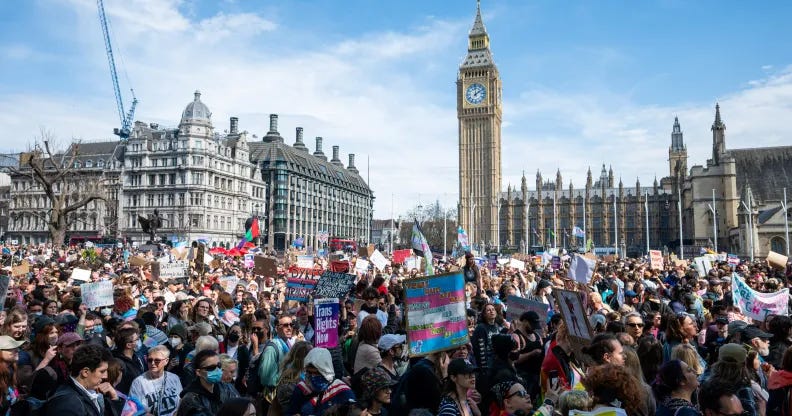
Freedom in the Arts, in dismissing the politics of gender liberation as ‘dogma’, is an attempt to delegitimise and discipline such opposition to the state and media apparatus’s rightward drift, and frame itself as neutral and sensible in the face of unreasonable and unserious trans activists. The transphobes demand an institutional acquiescence and capitulation to transphobia, and not only has the EHRC been steadily filled with transphobes,8 but even the new chair of Stonewall is sympathetic to them.
Beyond the two published reports, FITA haven’t really done much, apart from start a legal fight with Lancaster University, taking full advantage of the For Women Scotland ruling, over guidance it published for for museums, galleries, archives and heritage organisations to be trans-inclusive that was published in 2023. I think the real danger lies when they start to be treated as an authoritative, politically-neutral and respectable institution, which would give them more leverage to intimidate arts organisations into compliance. So I ask with our sector’s media publications, such as the Museum Association and The Stage: why the hell are you giving them any time of day?
Making art and giving performances are naturally-occurring impulses that are innate and essential to the human experience as social and creative beings. It is the process of metabolising our own experiences and histories; of problematising the ideological and social constructs and subjectivising processes that have been placed upon us; of exerting autonomy. If you exclude trans people, I’m afraid that you don’t quite get what it’s all about.
Much like Freedom in the Arts isn’t concerned with meaningfully addressing the crises facing arts and culture, transphobia is not concerned with addressing misogyny and gendered oppression, as much as it lauds itself to be. Do transphobes want to abolish, or even seriously criticise, the gendered roles we’re all expected to play, or fight for gender equality? No. Do they fight for childcare to be freely available and shared equitably? No. Do they organise against period poverty? No. Do they challenge the institutional violence of police and prisons? No. Do they fight for the safety of sex workers, who are overwhelmingly women and face high proportions of gendered violence, and for their ability to organise and make demands? No. But do they argue for economic and social justice against a system that traps women in poverty and in relationship with abusers? You’d never guess…
So, what can workers in the arts do to fight transphobia? We can firstly refuse the indignity of being gender cops by refusing to comply with the new guidance from the EHRC that advocates for segregation. Platform and commission trans people to make art. Refuse to give countenance to those who are acting in bad faith. As Juliet Jacques wrote recently for Novara, ‘civil disobedience and trans organisation will flush this contemptible code down the toilet of history.’
Solidarity with trans people, now and forever. It’s up to everyone who can to stand up for their dignity and humanity against those who have become entirely too comfortable in their hatred.
And to the transphobes, I say only: fix your hearts.
The whole video is pretty wack. She entirely conflates ‘transhumanism’ with being transgender, which is… interesting. People who conflate these tend to be deep in the transphobia rabbit hole.
Looking at both Rosie’s and Denise’s Twitter profiles, it seems like Riley’s Law, ‘Once you post transphobia, you never post normally again’ is well and truly applying. It really is an obsession that consume those it takes hold of.
Eternal thanks to my partner who works in research and helped me with this
The report also treats Graham Linehan as a poor, mistreated artist, and not, like, a man who went completely off the rails because of his bigotry.
If you’re interested in reading more about the worker and artist-led boycott campaigns around Palestine, I’d recommend Allan Struthers’ piece in Notes from Below.
Rosie’s diagnosis that ‘there is no doubt that the arts are in a culture of crisis and artists are individually under attack. The roots of this malaise are multiple, from funding cuts to poor governance. Funding insecurity leads to hesitant governance, whilst national public funders privilege bureaucratic compliance over freedom of expression underpinned by over prudent concerns about so-called reputational risk’, does to some degree recognise the economic structuring of precarity placed on the arts, but utterly mistakes ‘bureaucratic compliance’ as external to this precarity, and not what it is, a function of standardisation and filtration that is part and parcel of state funding under neoliberalism. It is certainly not a product of any kind of hegemony or expression of power by leftist or trans-friendly forces.
There’s a very similar organisation that exists in academia, incidentally.
If you want a good primer on institutional transphobia, watch this Philosophy Tube video.